Exxxtóriaxxx, History, Facts, Cases and “Stories”
28 – Truthful/Verídical – Fluminense Football Club – The Tricolor of Laranjeiras do Seo Julio
Part I
INTRODUCTION
Tricolor Father, Julio Cesar Leal, the 4th. of the name, tricolor of Laranjeiras, like a good part of the Cesar Leal Family. He practiced several sports, even played Basketball in his favorite Club, with a card and everything. In the Army he played Indoor and Field Soccer, in this he was a reserve of one of the greatest Archers of the Flu and Brazil, Castilho. Baduzinho even saw him play in the hall where his father served.
Vascaíno’s grandfather, the Portuguese José Pinto Lopes, nicknamed Badu in Madureira and Vasco da Gama where he played with the brothers Alberto and Tonico (also Badus) at Vasco da Gama in the 1920s and 30s, played for América as well. In 50 he was a Football Referee and flagged the first game of Maracanã, between the teams of São Paulo and Rio (1 x 1). He was proud to have introduced Mario Vianna (with 2 “ennes”) to Football. He made the youngest Vasco grandson, Jairo.
From a young age, Zé left Madureira, by train, for Maracanã to watch Flu games with Father and Mano.
He watched great games like Fla x Flu (or Flu x Fla) in 1963, with maximum capacity, they couldn’t get a ticket from the stands, they were from General, what an experience!!, staying under the tricolor crowd that threw bags of white wheat flour pretending to be Rice Powder, some bags came without bursting and burst in the heads of some nearby fans who felt blessed, despite the scare and dirt. Seo Julio’s hunchback suffered, alternating now Jairo and Baduzinho, which little ones could not see, even near the moat.
Even from the bench, at that time, and later when he worked at Fla and Vasco, he couldn’t see himself from the knee down, on the other side of the field, a child then, he saw nothing… only in the hunchback of the Father (to suffer in Paradise). Luckily he was an Infantry and had stamina and strength.
At 17, in 1967/8 he played for Cocotá, on the Island, in a friendly against Olaria he was invited to play there in Bariri, he was. The championship started, all right, Madureira, Vasco, Bonsucesso, et Cetera, until the Flu came that Baduzinho still supported, he already lived on the Island, he almost didn’t go to Maracanã anymore, he thought: what a mess, if I close the goal my favorite team loses, if I let the ball in and lose, the team that defends and gave the opportunity is the one who loses… he decided right there at the mouth of the Barrir tunnel that he was going to play a shovel of lime as a Flu fan, he would start cheering for the club where he played, he thought he would be a Professional. He only played at Cocotá and Olá.
In 1969, when he entered college, he decided to end his career aiming to be a professional, a good goalkeeper is a tall goalkeeper, he knew well, with rare exceptions, he was compact, although agile and with good jumping, in addition to the psychological qualities for a “Goalkeeper”. He maintained the decision to only support the club he worked for when he became Coach/Coach, and not even when he worked at the Flu Professional in 1996 (a difficult moment for the Club, with Renato Gaúcho who had left and returned at the suggestion of Baduzinho to Director Hargreaves) he changed his position.
When he left Flu that year he went to América de Natal who had a good campaign, in Laranjeiras Mequinha de Natal shook 4 x 2, at Flu’s home, in Laranjeiras, an opportunity in which the fans revolted and broke everything… Baduzinho’s fans had moved to Natal. One of the Coach’s recommendations to Flu in his Project was to increase the dimensions of the field, the classics were at Maraca, but against teams of medium or scarce investment, easy to lock and counterattack in those dimensions, and punished Flu badly with this strategy, putting it into practice. Merit of the Players.
It is worth remembering that in 1967, before playing at Olaria, Baduzinho was taken by his friend Paulinho Tiribiça – who played for Cocotá and played in the victorious Juvenil do Flu – to train at Flu with the permission of the famous Coach and former Player Pinheiro; He trained a part of the collective among the reserves and did not concede a goal, made some saves. At the end of the training session Pinheiro asked Paulinho to take him to the Coach’s Room where he greeted the young goalkeeper, said he was good, did great training, but Flu had its own philosophy and as for the goalkeepers they should be long, with the possibility of reaching good heights, in addition to the technical-tactical and psychological qualities. That he looked for another club, because he had potential. He didn’t look for it, the Olaria Club found him.
FLUMINENSE FOOTBALL CLUB: HISTORY
The History
Founded on July 21, 1902, by Oscar Cox, the young son of an English citizen vice-consul of England in Ecuador, Fluminense Football Club had, at the time, the gray and white colors. Cox is one of the main responsible for the arrival of football in Brazil. On several trips to the “Queen’s Land”, he always brought news, balls, sports materials. He also played, was champion of Carioca in 1906, when Flu was already green, white and maroon. With problems acquiring the gray fabric for the original uniform, in 1904 the change was approved, and the Tricolor was born.
A pioneer, Fluminense built the first cement stadium in Latin America, the Laranjeiras Stadium, which hosted the South American National Team Championship, currently Copa América, and the Latin American Olympic Games, currently the Pan American Games, and was the stage for the first relevant title of the Brazilian National Team.
Considered the Nobel Prize of Sport, Fluminense is the only club in Latin America to hold the Olympic Cup, in 1949, in addition to being the only football club in the world to have its name inscribed in the honor granted by the International Olympic Committee for services rendered to the sport.
It was Preguinho, one of the tricolor idols, who scored the first goal of the Brazilian National Team in World Cups. Since Cox, many stars have worn the Fluminense shirt. In addition to Preguinho, Pinheiro, Hércules, Escurinho, Waldo, Orlando Pingo de Ouro, Welfare, Ademir de Menezes, Rivellino, Altair, Jair Marinho, Gerson, Marcos Carneiro de Mendonça, Félix, Castilho, Carlos Alberto Torres, PC Caju, Pintinho, Branco, Didi, Ézio, Romerito, Assis, Washington, Renato Gaúcho, Tele Santana, Romário, Deco, Conca, among others, made the tricolor fans happy. Flávio.
Four-time Brazilian champion, champion of the Copa do Brasil and the Primeira Liga Cup, and 33 times state champion. Runner-up of the Copa Libertadores da América and South American.
In addition to the headquarters of Laranjeiras and Maracanã, where it plays its games, Fluminense has two Training Centers. The one in Xerém, in Duque de Caxias, is aimed at the base divisions, and the one in Barra da Tijuca, for Professional Football.
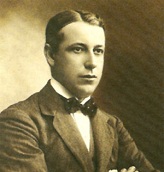
Oscar Cox, founder of Fluminense and introducer of football in Rio de Janeiro
Biggest and best Tricolor fans that Baduzinho has known:
Nelson Rodrigues –
Seu Toninho (Antônio de Almeida Santos) – President of E. C. Cocotá. D.E.P.
Sérgio Amato – Brother-in-law.
Serginho Amato – Nephew
Huguinho Amato – Nephew
Adilson and Gerson Sophia – Beloved Cousins
Carlinhos Portugal – My noble accountant since always. He knows a lot about Fluminense
Carlos Raphael Portugal – Carlinhos’ son and a deep connoisseur of Football and Flu
Beto Velho
Denílson – Zagueiro e Capitão Campeão
Berg
Filipinho – one of the greatest liberos in Brazil
Chico Magarinos
Dr. Tanagi – D.E.P.
Ronaldo Vidão
Joaquim da Padaria
Baduzinho – Tricolor until 17. Some say that being like this it has never been… but it was!
Vitor Leal – similar to his father: until when he went to play Basketball at Botafogo
End of Part I of VI
By Jucele
Julio Leal Zé Baduzinho
August 3rd 2026

 Julio Cesar Leal