EXXXTORIEXXX OF BADUZINHO – ZÉ – JULINHO
No 5: Verídica – Nova Morada, Ilha do Governador – Pretinho calls Baduzinho to watch a training session at Cocotá
Seo Julio, Baduzinho’s father, a military man and son of a military man, was not satisfied with living on Avenida do Bicho, although there in the village they were very well treated, providing a great childhood for his children. He worried about the future. As soon as they could, they moved to an island, a piece of land surrounded by water on all sides, that of the Governor, not that of Pedra da Moreninha, of the Loves, but the one that had the Pedra da Onça and of many Loves of Baduzinho, being one, Eternal, an Insulan Moreninha.
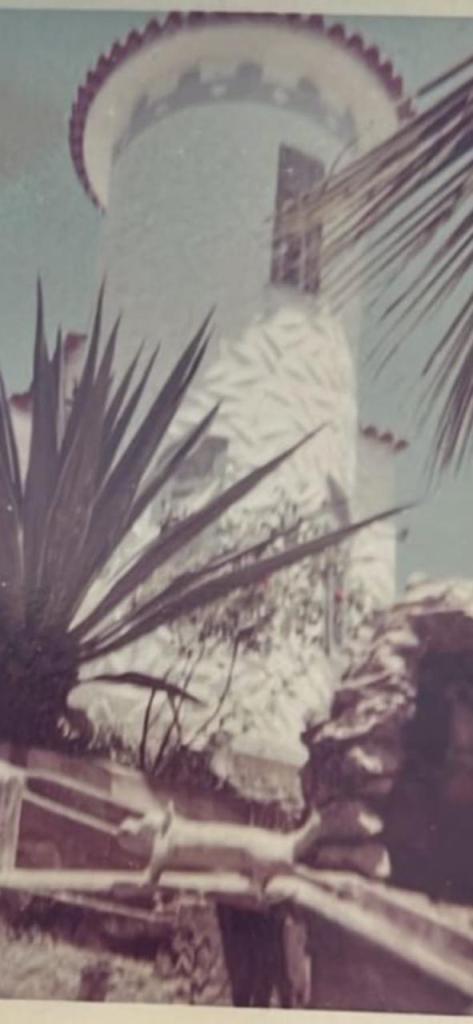
Ilha Grande, with few residents, about 50,000 at the time (today it has more than 1 million), practically everyone knew each other. The house looked like a Castle, with Tower and all, Grotto with Our Lady, all kinds of fruits (except jackfruit), residence of King, Queen, a Princess named Junira (Ju) and 1 Prince (Jairus). There was also a commoner, Zé (syncopation of Jucezinho, that long nickname given by Grandma Lygia that Brother Jairo could not speak), Julinho for the new Friends, except for the most intimate ones who always called him Badu, Baduzinho, because they met the Friends of Madura who came to go to a beach with the new residents, equipped with those truck tire tubes. Badu Vô lived there for many years too.
The first Friend (always with a capital A, as in Family, You, Friendship, You, Nature, Love and God), was Edevaldo who lived in a simple house on a large plot of land next to the neighbouring house, with no residents. On Edevaldo’s land there were many jackfruit trees, it was a party all year round, we learned to open and thresh. The second was Bolãozinho, who also studied at Pedro II (as well as his brother Marco Aurélio who Little Badu met later). The third was Pretinho – Little Black (to this day his name is not known), Gerôncio’s brother and large Family, who lived next to the adjoining house, Dona Palmira’s, who only came from Laranjeiras on weekends.
Pretinho played well! The Island had many fields, land of great players, one of them, Itacolomi, among the greatest of all time, Nilton Santos, who had a twin brother (maybe not a twin, but he was similar, just the same) who also played a lot and defended the colours of Cocotá, also a left back (some said he was better than Nilton… in the same way that some said that, Eduzinho (a Beloved of Baduzinho) better than Zico, but Nilton was bi world and called “The Encyclopedia”. Another famous Islander and World Champion in 70: Brito, the best physical preparation of the 70 World Cup. He ran around the island. in a silver sweater!
Nearby, less than 1 kilometre, was Praia do Cocotá, nicknamed at the time Castelinho da Ilha, the beach of the beautiful girls, with a field of soccer, paddleball and volleyball, in addition to 1 field of official beach measurements in Saco do Cocotá, where the teams played in swimming trunks or shorts and hats that differentiated the teams. Gonzaguinha, who lived with his Father Gonzagão and Family near the Church, played in one of these teams, skinny, he was very skilled, as much as a Composer. Xinxa, Robertinho, Nei, Dico, Miltinho, and many others, including the new resident Julinho. Younger, Baduzinho was sometimes sent to goal!
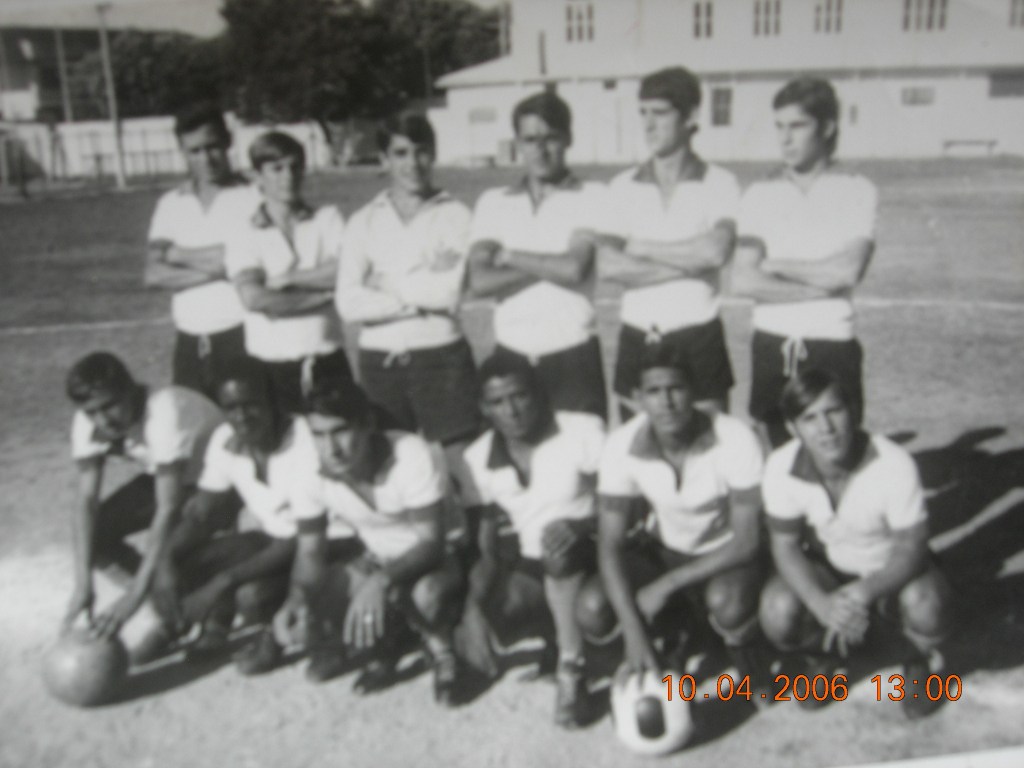
One day, Pretinho, who played in the Juvenil (up to 20 years old) of Cocotá, a root left winger, dribbler to the bottom, fast and with a good cross, passed by the Castle, shook the chain with a padlock on the gate and called the commoner Julinh0, ex Baduzinho, to watch his training at E. C. Cocotá, in Cleto Campelo, 200 meters away. When I got there, training under the command of Coach Galhardo, I learned that one of the goalkeepers had not appeared. Pretinho had seen Julinho grab one of the peladas on the beach (for those who played all the balls and cycled on the cobblestone of the village and on the taco and cement courts, on the sand it was much better, on the grass too), very hardworking, although very short (at 13 he was the second shortest of all Pedro II, he only beat Grilo, which was minimal) and recommended it to Galhardo who accepted suspiciously. They lent boots (I had never worn them), a padded shirt and shorts, I didn’t want knee pads, there were no gloves. He shoots high because the goalkeeper is short (he listened all his life), but he had agility, reflexes of the room, positioning and jumped a lot. Técnico liked it, maybe there was a shortage of crazy people in the area, and called Baduzinho, I say: Julinho, to come back. It’s back!
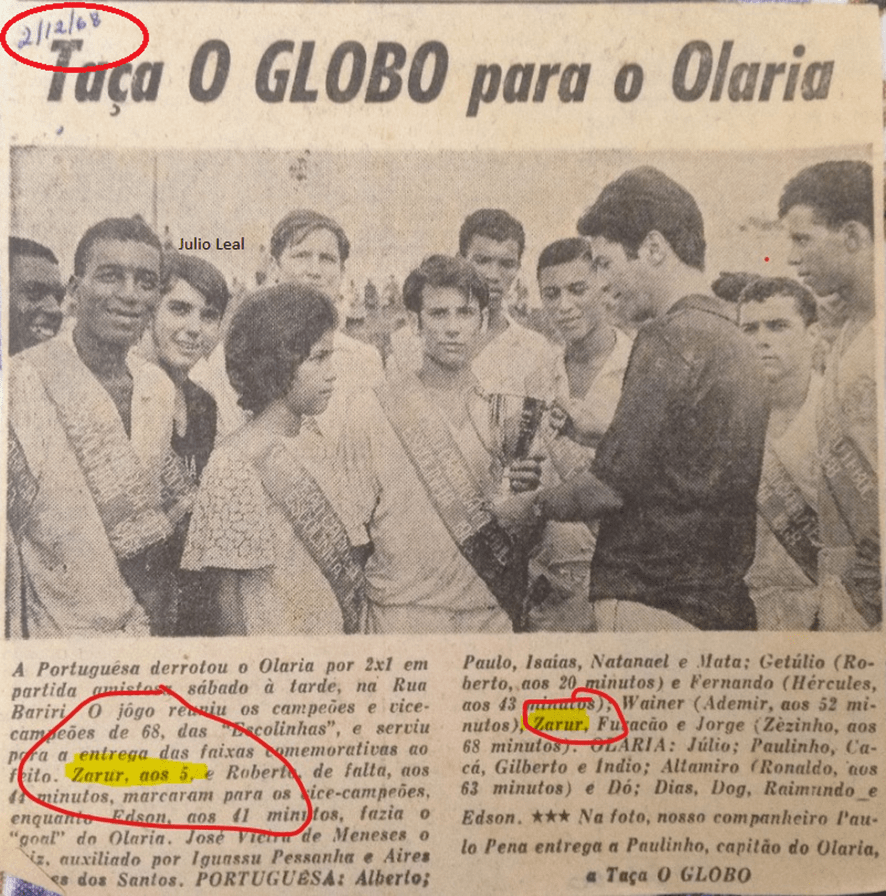
Lucky for you, because that team was very good, later champion of the Serie B of the D.A. (Autonomous Department) of the F. E. R. J. in 1969, and Vice in the first year in Serie A, in 1970, which had great and old Clubs, such as Nacional, Municipal da Ilha de Paquetá, Pavunense, Ramos, Manufacture, Royal da Ilha do Governador, Carioca, Santa Cruz, Kosmos, Rosita Sofia and others, at the time it was like the second division of Professional Football, as there were no second or third divisions. From those teams and, in particular, Cocotá, many left for professional clubs, most of them still in the youth categories, such as Robertinho-Garrinchinha (Roberto Carlos) who played for Botafogo, Santos alongside the King and the Olympic Team, Paulinho Tiribiça who played in the Fluminense Youth (Paulo Cesar Pereira Alves, nephew of J. Alves who played with Zizinho at Bangu), Jacaré (also goalkeeper), Dó, Rui, Lima, Erly, Alberdan (the best and greatest cow tail dribble ever seen) and even Julinho who was called to Olaria along with Dó after a Friendly match, being champions of Escolinhas (up to 18 years old) in 1968. Most of the good players on the island preferred the coziness of the bucolic place, going out to training et catera scared many.
In the past, Cocotá had already won laurels, players who then played in the veterans (over 32, or in the cacarecos (more than 50). Beto Preto, Lino, Vassalo, Aurinho, Paulo Baiacu, Helinho, Walter Alma Grande, Turquinho, Machado (he took only 1 step to take the penalty) and many other good ones.
Julinho Baduzinho played at Olaria (Champion in 68) and 69, (including at Maracanã in 69, in a friendly game against the Carioca National Team of the 68 Championship (1 x 1) in front of 130 thousand fans, in Preliminary of FLU x VG), and returned to Cocotá, in the Main Team in 1970, when he joined the EEFD of UFRJ, ended his career towards the professional as a player to invest in his coaching career, which he already exercised amateurishly at his Clube do Coração (Heart).
In the last year of Scientific, I was in a class preparing for the Engineering entrance exam, when in July, after a training session I watched from Cocotá, I talked to some friends and Prof. Ênio Farias, who gave the physical preparation of the first team at night, and talked to everyone and had his meal, because he lived outside the Island. Ênio asked one and the other what they would study and, when he heard Julinho’s answer, he immediately replied: You have nothing to do with Engineer, You at 18 years old already train the minor categories of Cocotá, Coach of the Base Categories, Schools 08, 09, 10 years, then Infant (Dente de Leite, which was on Tupi, created by Ivo Gorgulho. A team that later served as the basis for the Infant Juvenil champion of Rio de Janeiro in 1973, with the Coach being named the best of the competition that had the clubs of great investment and renowned. Completed Ênio: at Praia da Bandeira You teach Swimming and do the children’s recreation. You must do Physical Education! Immediately convinced, not being able to be an engineer, he told his father (who did not like it), but later he was his biggest supporter.
So Baduzinho passed to Julinho and then to Julio Cesar Leal, Julio Leal. He knew a large part of the world and made Friends everywhere!
Thank you Pretinho, eternal gratitude to Ênio and to the President of Cocotá Seo Toninho de Almeida Santos.
Maktub! – it was written, if it wasn’t, now it is!
P.S. The correct would be Stories of Baduzinho-Zé-Julinho, but in spoken Portuguese in Rio de Janeiro, the Carioca dialect, the S sounds like a long X. XEEEZ like in Cheese.
P.S. O certo seria Stories of Baduzinho-Zé-Julinho, mas no Português falado no Rio de Janeiro, o Carioquês, o S soa com longo X. XEEEZ como em Cheese.


By Jucele
Julio Leal
March. 5th, 2026

 Julio Cesar Leal